
Peter Blum, Hypnotherapist
How did you come to pursue hypnotherapy?
As a child of the ’60s, I was always fascinated with consciousness. Besides the typical experimentation with cannabis and psychedelics, I was also introduced to Hatha yoga in 1968, and meditation in 1970. Growing more interested in how to reach different states of consciousness without substances, I explored ancient techniques of breathing, yogic postures, moving chi, using sound and light, and visualization.
In 1985 I was introduced to hypnosis and subsequently became certified.
What is hypnotherapy?
Hypnosis, as currently practiced, is a fairly simple process, reaching a liminal state, i.e., between wakefulness and sleep, quickly, often utilizing elements of progressive relaxation, breathing, and imagery.
Hypnotherapy is one of the more misunderstood healing modalities, so I frequently find myself deconstructing myths people have heard or believed so they can trust the process enough to explore it. Some re-education that is helpful with first time hypnosis clients involves explaining that what they may have witnessed in stage hypnosis demonstrations or seen on late night TV movies, is about entertainment. What I practice and teach are therapeutic applications, where a person learns to enter a liminal state where they can bypass conscious limitations, and utilize some of the vast resources of their unconscious minds. As renowned psychiatrist and innovative hypnotherapist Dr. Milton H. Erickson said, “We know the unconscious can do things, and it’s important to assure your patient that it can.”
Hypnosis is not sleep. It is not a state where you can be made to do or say anything that you do not, on some level, agree to or wish to. I often frame it as a “spiritual art form.” It is the primary modality that I offer to those attending Health Care is a Human Right.
Possible applications are problem solving, creative inspiration, and retraining old habit patterns of thinking and behavior into newer, more self-empowering ones. Probably the most well known applications are smoking cessation, weight/eating management, pain control, and stress management.
Can anyone be hypnotized?
Yes! Better to think of it as a “going into …” If one considers that we are always going in and out of different brain wave states all day, and making suggestions to ourselves, or accepting suggestions that others give us, then perhaps it is useful to say that we are ALL experiencing hypnosis every day. Certainly some people are capable of going into a deeper contemplative state than others, but everyone is capable of experiencing some sort of liminal state where the person can manifest desired changes.
Why do you practice with HCHR?
I have always believed that “alternative,” “holistic,” or “complementary” healing practices should be accessible to all, regardless of income, or whether it’s covered by insurance. For more on this, and my earlier attempt to find ways to offer this to the public, readers can consult the article on the HCHR website, “Hypnosis Without Borders,” written in 2014, shortly after I became a practitioner (https://www.hchrny.org/links). I was president of the Board of Directors from 2023 to 2025 and continue to serve on the Board.
What do you do in your time away from HCHR?
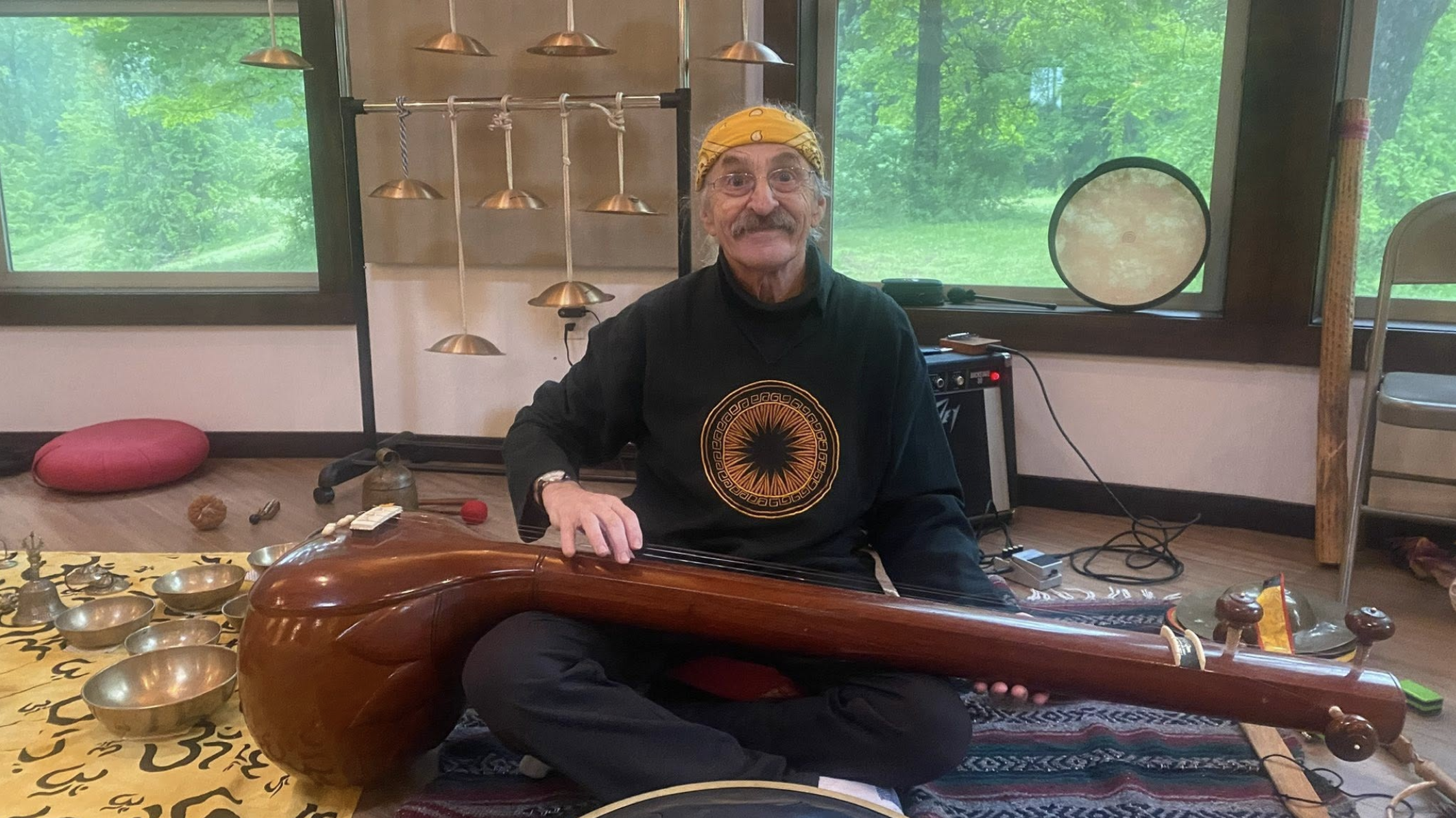
I am a father of two (daughter and son), and a grandfather of three boys. I love spending time with them. I also have had a dual career for the past 30+ years offering what are now commonly called sound baths, or individual sound healing sessions, utilizing singing bowls, gongs, tuning forks, drums, etc. I enjoy training and certifying others in hypnosis, and since 1994 have trained hundreds of people. A couple of times a year I bring my good friends Dr. Lewis Mehl-Madrona (another psychiatrist, like Erickson, who makes extensive use of hypnosis) and his wife Barbara Mainguy to Woodstock where we co-facilitate Coyote Healing Camps. For more information on my work, visit https://www.trancesonics.com
N.B.: Receive a hypnotherapy session with Peter at the next Phoenicia Clinic on 9/22/26. See flyer here.